

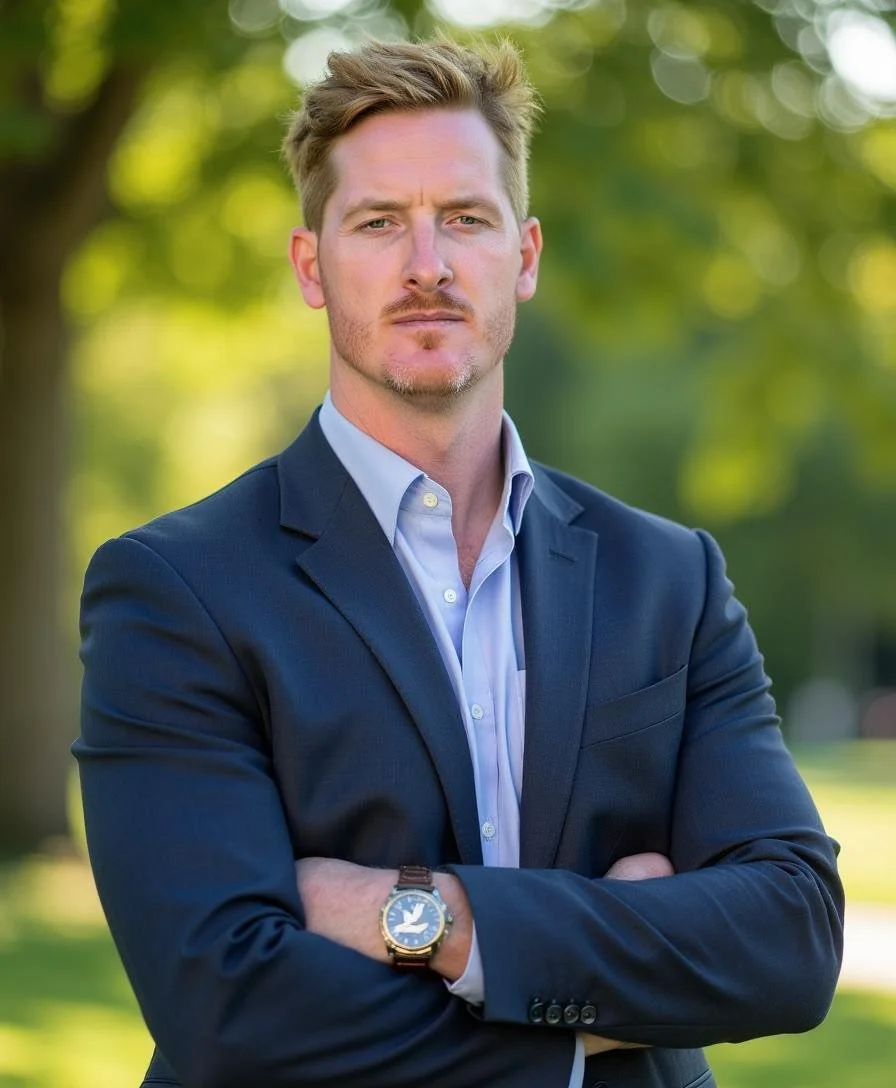
In 2015, Brodie Duncan’s life changed in an instant.
The experience that changed everything
After completing his trade as a fitter and turner at OneSteel in Mayfield, Brodie travelled overseas to play rugby before returning home to work in heavy industrial mining workshops. But that same year, a major workplace accident resulted in his right arm being amputated below the elbow. Surgeons were able to reattach it during a nine-hour operation later that same day, but what followed was years of recovery, rehabilitation and uncertainty.
Over the next two years, Brodie underwent another nine operations trying to regain function and long-term stability in the arm.
Today, he still has limited use of it.
But the physical recovery was only part of the story.
What stayed with him most was something many people never think about until they experience it themselves - how quickly everyday life can become difficult when the world is not designed with your needs in mind.
Suddenly, things most people take for granted required planning, stress and constant mental preparation.
Even after pivoting his career to successfully establish Crusader K-9, breeding and training elite military and police working dogs, the systemic gaps in community inclusion stayed on his mind, ultimately sparking a new mission.

Discovering accessible venues:
Why Brodie Duncan is fighting event uncertainty with Inclusable
Imagine wanting to go to a concert, festival or community workshop, but having to spend hours calling venues, digging through vague websites and playing detective just to find out if you can get through the front door.
For people navigating the world with diverse needs, whether due to a permanent disability, a temporary sports injury, managing a pram or simply slowing down with age, planning a simple night out can be an exhausting obstacle course. Too often, unclear information online leads to a stressful gamble, forcing many to stay home and miss out entirely.
"One thing that really stayed with me was how mentally exhausting uncertainty becomes," Inclusable founder Brodie Duncan said.
"You start overthinking things most people never have to think about. Can I access the venue safely? Is there accessible parking? Will there be stairs? You can start feeling excluded before you even leave home."
Brodie understands this invisible barrier firsthand.
Long before Inclusable existed, Brodie was deeply connected to the community. Growing up in Merewether, he attended Holy Family Primary School and St Pius X High School, spending weekends playing rugby union for Merewether Carlton and rugby league for South Newcastle. Community participation, sport and connection were always a major part of his life - which made the loss of confidence and independence following his accident even more profound.
"My outcome from my workplace accident completely changed the way I see the world," Brodie reflects. "It made me realise that disability and accessibility is not just about the injury itself - it’s also about how environments, systems, businesses and communities either support you or unintentionally exclude you."
Driven by this, he created Inclusable to revolutionise event discovery, helping all Australians discover experiences with greater confidence, first in Newcastle and ultimately across Australia.
More than accessibility: event discovery for everyone
The original spark for Inclusable came through conversations with a close friend living with disability, combined with Brodie’s own lived experience after his injury.
They kept coming back to the same frustration.
Everyone wants to participate in life and share experiences with friends and family - whether that’s attending concerts, festivals, sporting events or dining out at local restaurants. But traditional event and ticketing platforms treat accessibility as a niche afterthought, ignoring the fact that a high portion of the population requires clearer information to navigate public spaces.
Accessibility isn’t a narrow category - it extends far beyond physical mobility. It’s about parents navigating crowds with a pram, tourists unfamiliar with a local venue, seniors looking for comfortable seating or individuals managing neurodivergence, sensory sensitivities, anxiety, chronic pain or temporary limitations.
But simply figuring out whether somewhere is actually going to work for your specific circumstances can be incredibly difficult.
There was no single trusted source of comprehensive venue data.
One of the things Brodie realised was that exclusion does not always look dramatic. Sometimes it looks like:
deciding not to attend because the information online is unclear
arriving and discovering the environment is not what was promised
struggling through environments not designed for your current needs
feeling embarrassed repeatedly asking for assistance
slowly withdrawing socially because the uncertainty becomes emotionally exhausting
That invisible barrier exists for far more people than most realise.
And in a world powered by technology and AI, Brodie kept asking the same question:
“Why is event and accessibility information still so fragmented, vague and unreliable?”
It shouldn’t require detective work just to attend an event confidently.
Moving beyond a compliance checklist with accessibility intelligence
A major frustration for the community is how poorly accessibility is currently communicated.
A generic "wheelchair accessible" tag on a ticketing platform doesn't tell a person if there is step-free entry, accessible bathrooms, quiet areas or companion support.
"Compliance is the minimum standard - not the end goal," Brodie explains. "A lot of businesses approach accessibility like a legal checklist. But true inclusion is about creating experiences where people genuinely feel welcome, comfortable, respected and empowered to participate."
Human-first technology changing lives
To remove this friction, Inclusable is built as a scalable, mainstream event discovery platform, powered by a sophisticated accessibility intelligence layer. Utilising advanced AI, the platform automates event population and performs intelligent venue accessibility matching to deliver highly accurate, personalised data at scale.
By operating on a philosophy of "know before you go," allowing users to make informed choices rather than risking physical safety, stress or embarrassment at the door.
"I hope Inclusable helps people feel more confident participating in life. Not isolated. Not uncertain. Not overlooked. Just included," Brodie says.
"If Inclusable helps someone regain confidence, reconnect socially, attend a concert with friends or simply feel included again - that’s incredibly powerful."
Not the accessibility police
One thing Brodie Duncan feels strongly about is that Inclusable is not about policing venues or shaming businesses.
“We’re not the accessibility police. We’re your guide to what’s possible.”
That philosophy sits at the centre of the platform. Inclusable is designed to help venues and organisers communicate accessibility information more clearly, while helping attendees understand what experiences may work best for their individual needs.
Because inclusion is not about perfection. It is about transparency, awareness and helping people make informed decisions confidently. That approach also benefits organisers and venues.
Turning lived experience into a business model
Brodie’s personal journey didn't just inspire the platform - it directly shaped how Inclusable operates commercially.
To ensure critical information never becomes an expensive luxury, the platform is entirely free for everyday users. It is also completely free for partner venues and organisations to list their spaces, removing the upfront friction that usually stops businesses from sharing data early on.
Where Inclusable really disrupts the status quo is through its ticketing model. Instead of penalising organisations and attendees with bloated costs, the platform charges a commission on ticket sales that is highly competitive and significantly lower than major traditional ticketing competitors.
"For us, it’s not about using AI because it sounds impressive. It’s about solving a genuine real-world problem at scale," Brodie explains. "The model is designed around accessibility, transparency, scalability and long-term sustainability rather than maximising short-term fees."
By building long-term digital infrastructure, including upcoming API and SaaS tools, Brodie is proving that scalable tech can be commercial without losing its heart. Ultimately, Inclusable isn’t just an app for a single demographic - it’s the future of how everyone will discover and experience events.